Two shops can order the same custom deli paper, with the same logo and the same food-safe promise, and pay wildly different amounts per sheet. The difference is usually the printing method. Flexographic, digital, and offset each win in a specific situation, and picking the wrong one either burns money on plates you did not need or caps the detail your artwork deserves. Here is how the three methods actually differ and how to match one to your order.
The three ways deli paper gets printed
Flexographic printing uses flexible relief plates that transfer fast-drying ink onto unwaxed paper as it runs through the press. It is the workhorse for large volume because once the plates exist, each additional sheet is cheap. The catch is that every color needs its own plate, so setup cost climbs with the design and only makes sense once you spread it across thousands of sheets. Digital printing lays the image straight onto the sheet with high-volume inkjet or laser heads and no plates at all. That means almost no setup, which is why digital carries little or no minimum order and handles photographic art, gradients, and full color without extra tooling. Offset sits at the premium end: it reproduces the finest detail and holds color consistency across a run better than either alternative, but it is a high-volume method with real setup, so it appears mostly on large, design-critical jobs. For most food businesses the real decision is flexo versus digital, with offset reserved for the biggest, most detail-sensitive runs.
Where the cost lines cross
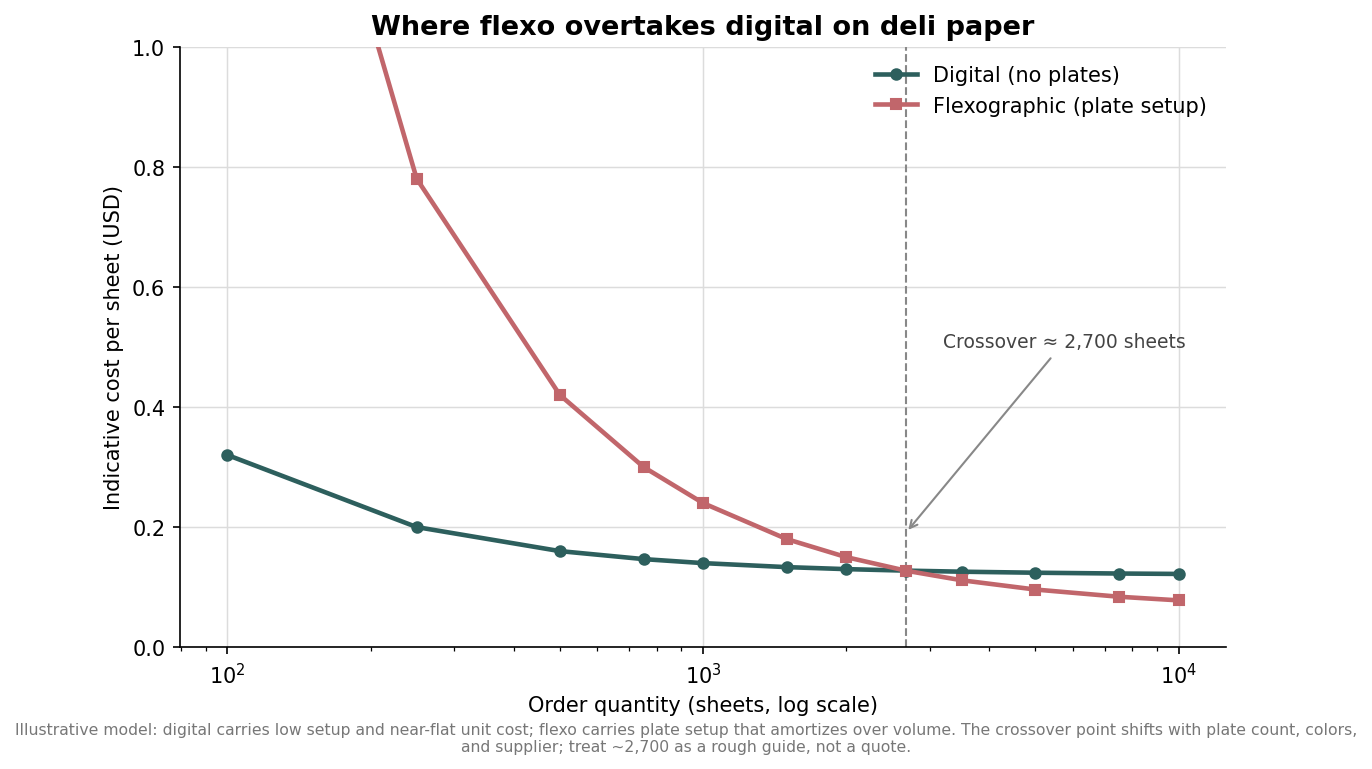
The economics come down to setup versus marginal cost. Digital starts cheap and stays roughly flat per sheet, so a run of 200 and a run of 2,000 cost about the same each. Flexo starts expensive per sheet because you are paying off the plates, then drops below digital once the volume is high enough to dilute that fixed cost. The crossover is not a fixed number, but for a simple one or two color logo it commonly lands somewhere in the low thousands of sheets. Below that, digital almost always wins on total cost and flexibility; well above it, flexo pulls ahead and keeps widening the gap. If your annual usage is a few hundred sheets a month, digital reprints on demand usually beat sitting on a giant flexo run that yellows in storage before you use it.
Detail, color, and what each method can reproduce
Match the method to the artwork, not just the budget. A clean one or two color logo prints beautifully on flexo, and most deli paper suppliers offer one-color, two-color, and full CMYK options with PMS spot-color matching when brand color accuracy matters. If your design leans on photography, fine gradients, or many colors, digital reproduces it without a plate per color and without the registration drift that fine flexo work can show. Whatever the method, the ink is the part that keeps the paper food-safe: reputable printers use soy, vegetable, or water-based inks rated for direct food contact, and the print sits on the side that faces out, not against the food. Ask any supplier to confirm the inks are food-contact rated and, if you serve hot or greasy items, that the ink and any grease-resistant treatment hold up without smudging.
Sizing and weight still matter more than method
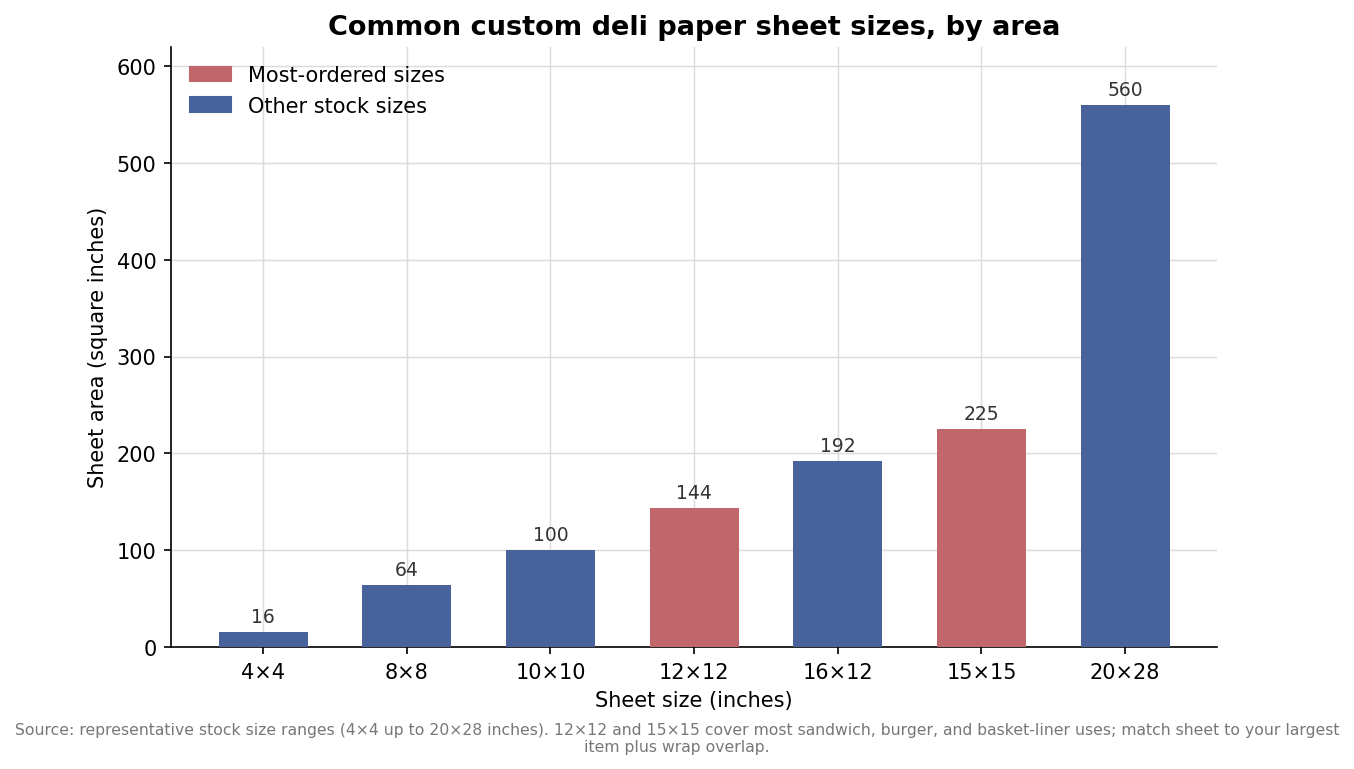
The method sets your cost curve, but the sheet itself sets the experience. Deli paper is light stock, commonly around 30 to 50 gsm, with white kraft near 38 gsm and brown kraft near 40 gsm being typical. Lighter sheets drape and wrap tightly; slightly heavier stock feels more substantial in a basket. Size is the bigger lever. Stock sizes run from about 4 by 4 inches up to 20 by 28, and the two that cover most uses are 12 by 12 and 15 by 15, which handle sandwiches, burgers, and basket liners with enough overhang to fold. Pick the sheet by your largest item plus the overlap you need to wrap it, then order a size up if you are unsure, because a sheet that is slightly too big still works and one that is too small does not.
Choosing in one pass
Run the decision in this order and you will rarely regret it. If your order is under roughly a thousand sheets, or your art is photographic or multicolor, or you want to reprint small batches on demand, choose digital. If you are buying in the thousands with a simple one or two color logo you will reuse for a long time, flexo earns its plate cost. Reserve offset for very large, detail-critical runs where color consistency across the whole batch is worth a premium. Lock the ink as food-contact rated regardless of method, choose the sheet size from your largest item, and confirm the exact minimums and lead times with the supplier before you commit, since those vary by shop and by season. Get the method right and the same logo that cost one shop a fortune costs you a sensible per-sheet price.