If you run a deli, food truck, or barbecue joint, the paper you wrap food in is easy to get wrong, because four very different products get used interchangeably in conversation: deli paper, butcher paper, parchment, and freezer paper. They are made differently, coated differently, and fail in different ways. Wrap a hot sandwich in the wrong one and it soaks through, sticks, or sweats. Here is what each paper actually is, how to match it to the job, and which one is the right surface to carry your brand.
Deli paper: the printable service wrap
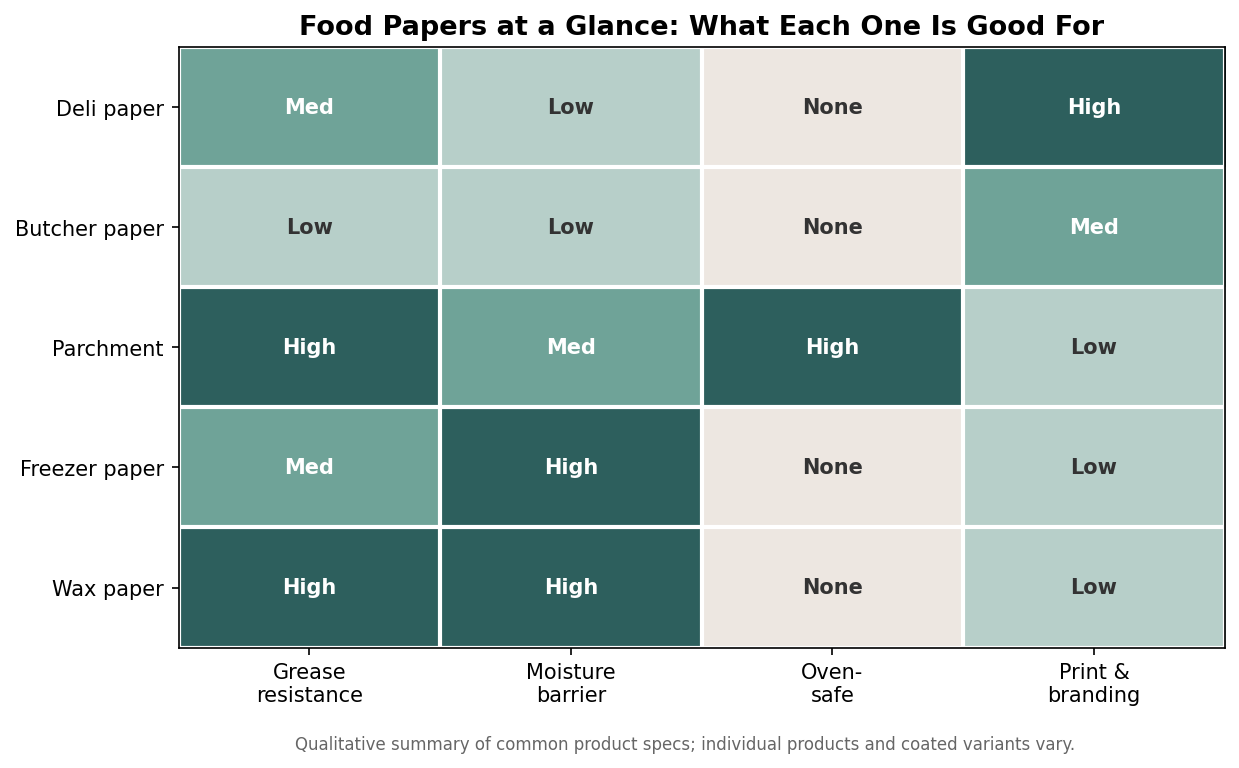
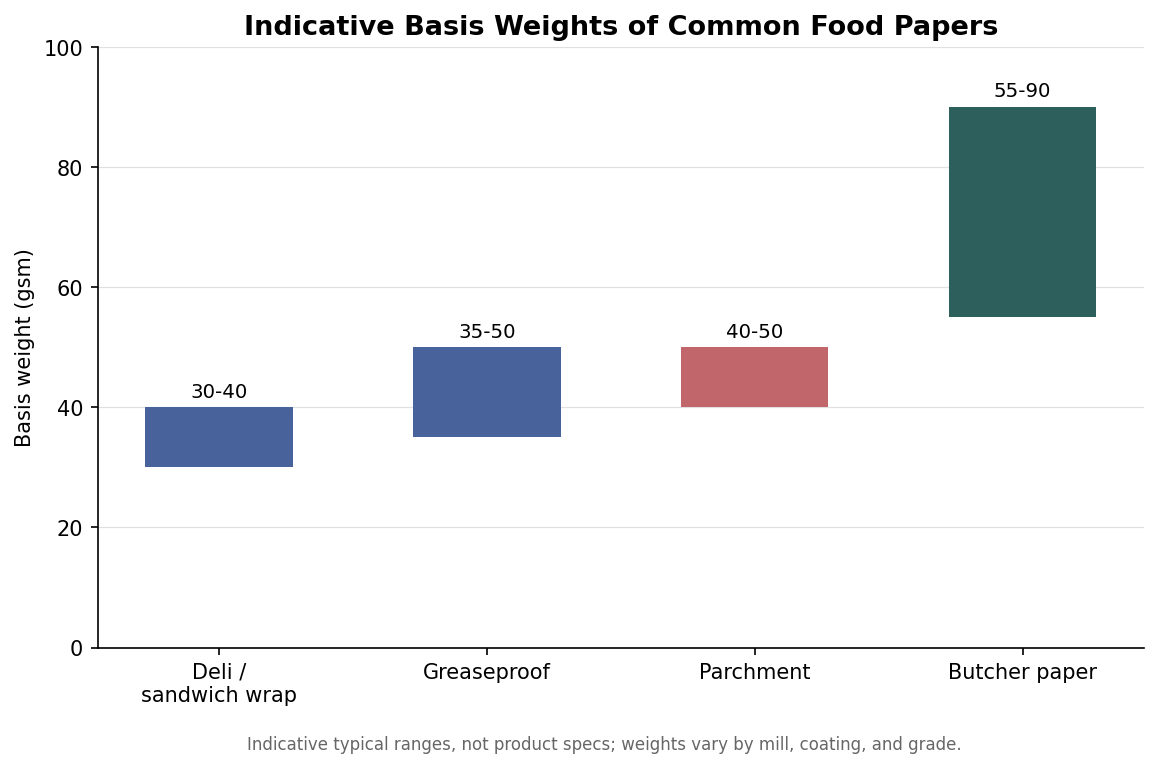
Deli paper is the light, grease-resistant sheet you see under a burger or folded around a sandwich. It is thin and inexpensive, built to hold up to grease and to hold a printed design, which is why it is the default surface for branding. Logos, patterns, and custom colors print cleanly across the sheet, so it does double duty as packaging and marketing. It resists grease well enough for fried food and sandwiches and keeps a basket or tray tidy, but it is not a moisture vault and it is not oven-safe. It is a serving and wrapping paper, not a cooking one. For most food businesses this is the workhorse, because it is the paper the customer actually holds. Its light basis weight is part of the point: a thin sheet folds and tucks cleanly around a sandwich or burger, and it comes as flat pre-cut sheets for wrapping and lining or as rolls for higher-volume operations. That same thinness is why it is not the paper for a dripping rack of ribs or a week in the freezer; it is tuned for the moment of service, not for storage or heat.
Butcher paper: heavier, breathable, for meat and trays
Butcher paper is thicker and more absorbent than deli paper. In its uncoated form it is breathable, which is exactly what you want around fresh meat and cheese, or a brisket that needs to hold moisture without steaming. The pink or peach “steak” variant adds a little moisture resistance for that reason, and a poly-coated version adds a grease barrier. It is sturdy enough for tray lining, wrapping large cuts, and presentation, but it is not made for the oven, and uncoated it lets grease through faster than deli paper does. Its weight is the tell: it sits well above deli and sandwich wrap on the scale, which is why it feels stiff and protective rather than light and foldable. The color also signals the grade in practice, with plain white reading as clean and professional for presentation and the peach and poly-coated versions chosen when the food is wetter or greasier than uncoated paper can handle.
Parchment: the oven paper, not a serving wrap
Parchment is the odd one out because it is built for heat. A silicone coating makes it non-stick and oven-safe to around 450 degrees Fahrenheit, and it repels both oil and moisture, which is why it lines baking sheets and wraps food cooked en papillote. Those same properties make it a poor branding surface: the silicone that stops food sticking also makes it harder to print on, and it is not a common choice for takeout or service wrapping. It shows up as flat pan liners, quarter-folded sheets, and rolls in the kitchen rather than at the counter. Use parchment where food meets heat, not where food meets the customer, and keep a separate stock of deli paper for anything that leaves the building in a customer’s hand.
Freezer and wax paper: moisture barriers, not branding
Freezer paper carries a poly or wax coating on one side that forms a strong moisture and air barrier, which is what prevents freezer burn during long cold storage; the coated side faces the food. Wax paper is coated on both sides and resists grease and moisture, but the wax softens and can smoke, so like deli paper it does not belong in the oven. Both are moisture-management papers meant for storage and separation rather than service, and neither is a natural home for a printed brand. If you find yourself reaching for one of these to wrap a sandwich, it is usually deli paper you actually want.
How to choose
Work backward from what the paper has to survive. If the food is going in the oven, that is parchment, full stop. If you are storing meat in the freezer, that is freezer paper. If you are resting or wrapping large cuts and want breathability, reach for butcher paper, choosing the coated or steak variant when you need more grease or moisture resistance. And if the paper’s main job is to wrap a sandwich or line a basket at the moment of service, the moment a customer sees your logo, deli paper is the sheet built for both grease and print. Matching paper to task is not only about performance; it decides which sheet carries your brand to the customer without falling apart on the way.
The four papers overlap enough in appearance to be confused and differ enough in construction to fail if you swap them. Deli paper is the service and branding wrap, butcher paper the heavier meat-and-tray paper, parchment the oven paper, and freezer and wax paper the moisture barriers. Choose by the job each sheet has to do, and the one your customers actually hold, the printed deli sheet, will be doing exactly what it is good at.